

Ploy Against The Enemy - Chapter One
Death and Rebirth

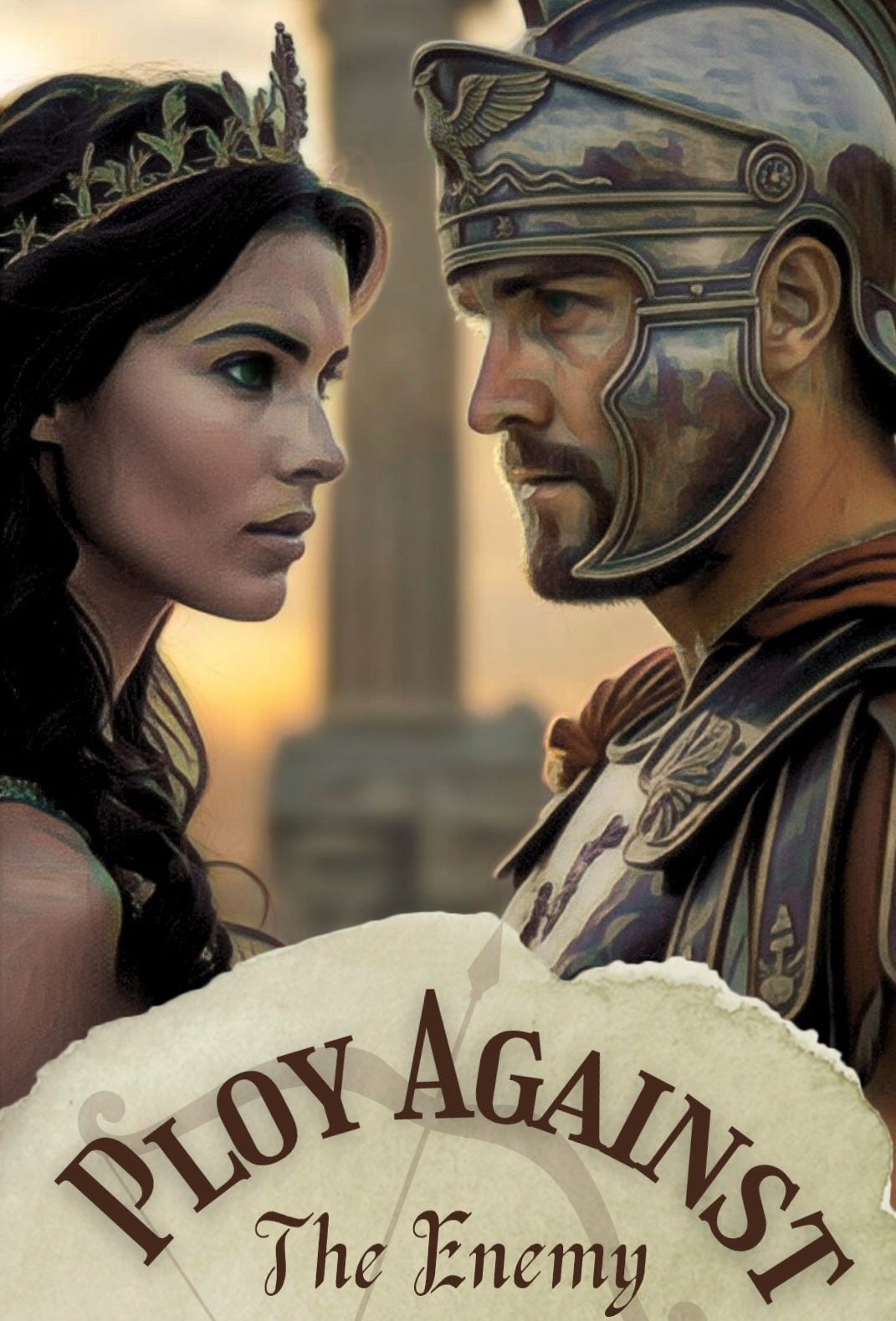
106 AD, Dacia
A north gale tore through the harsh winter night, the cold biting like shards of glass against the soldiers’ exposed hands as they tightened their grip around the reins, knuckles pale beneath weather-cracked skin. After a grueling, relentless ride, the castle finally emerged before them, its vast silhouette rising out of the darkness.
Their horses snorted into the chill, stamping hooves on frozen ground while the riders dismounted, boots crunching over frost-hardened stones. They trudged up the castle’s jagged steps, each ascent a slow battle against the frigid wind as their breaths rose in ghostly clouds, fleeting white plumes that vanished almost immediately.
The halls of the palace were unnervingly silent; each footfall echoed against the cold stone like the toll of a distant funeral bell, reverberating through corridors devoid of life. The soldiers stepped into the throne room, the massive wooden doors groaning as they pushed them open. At its center stood Lord Brasus, the king’s trusted advisor, his posture rigid, yet shadowed with unease. He sensed the gravity of their arrival and waited, every line of his features taut with both curiosity and concern.
One soldier, a bearded man whose face was carved with weariness and lines of countless campaigns, stepped forward. “Lord Brasus, we bring grave news from the border.”
A sudden pallor creeped over the advisor’s normally composed face. “Go on.” He said, voice steady, though the chamber’s stillness seemed to lean toward him, pressing for answers.
The soldier’s calloused fingers clenched the scabbard at his side, bracing against the weight of his words. ”It is with great sorrow that we inform you… the King is dead.”
The man swallowed hard, throat bobbing once before rasping out “He was slain in battle.”
Shock rippled across Brasus’ face, his pupils dilated as his mind raced to grasp the enormity of the loss. He whirled toward the nearest servant, urgency snapping through him. “Send for the Princess.” he ordered. “Tell her to come to the throne room immediately!” The servant froze, a tremor running down her spine as she fumbled with her sash. “Y-yes, my lord.” She stammered, before bolting down the corridor, her hurried steps swallowed by the cavernous silence left behind.
At last, the faint echo of footsteps reached the throne room, announcing Princess Aspasia’s arrival. She walked in, confusion etched across her features as she caught sight of the faces marked by quiet sympathy and resignation. “You summoned me?” She asked, her voice steady, betraying only the slightest trace of the nervousness she kept carefully in check. Lord Brasus stepped forward. The soldiers behind him looked anywhere but at her, bracing for the moment. ”Yes.” He replied, his voice carrying a tone of seriousness. “I fear we bear news that is most troubling, my Princess.” The Lord took a deep breath, eyes heavy with the knowledge that his words would forever alter her world. “Your father… King Decebalus, has fallen in battle.”
Once his words sank in, Aspasia’s face became a mask of controlled emotions. The shock and grief she felt were hidden behind a stoic expression, her eyes betraying nothing of the turmoil that roiled underneath the surface.
“Princess,” Brasus began carefully, “these are uncertain times, perhaps it would be best if I take command of affairs until you—”
“No.” She replied, her spine locked straight as an iron rod. “Dacia will not be ruled for me. Summon the council by dawn. I will hear every detail of our current position, enemy movements, troop strenght and supply lines.”
Her gaze didn’t waver. “And Lord Brasus?” She stepped forward “You will not make arrangements in my name without my counsel. We’ll discuss strategy when the council convenes tomorrow.”
The words hung heavy in the air as her gaze drifted to a familiar shape on the throne dais. Her father’s war cloak, left gently draped over the armrest.
Her breath hitched, and for a fleeting moment, nostalgia threatened to overwhelm her. Yet, with a steely resolve, she stiffened her backbone and swallowed the lump in her throat, clearing it with a subtle cough. “Now please excuse me, I must light my father’s funeral pyre.” She left the room without sparing anyone another glance, each clack of her shoes echoing like a ticking clock in her mind. Her heart rate escalated, a frenzied throb beneath the calm surface of her calculated stride, desperate to escape the suffocating air that had suddenly thickened around her.
The moment she left, the hall swallowed her absence like a tomb. Brasus stood frozen, jaw clenched so tight it could crack stone. He had braced for tears, perhaps even hysteria. A girl undone by grief and the power thrust upon her. His mistake finally dawned on him, he hadn’t just underestimated a Princess, he had challenged a Queen.
The soldiers exchanged knowing looks, some wary, some impressed.
A silent realization passed through them all; Dacia had not only kept its teeth, in fact, it had grown fangs.
Copyright © 2025 Anna D.
Well written
Anna, your prose carries the kind of cinematic clarity and emotional precision that historical fiction too often reaches for but rarely holds. The tension between Brasus’ calculated condescension and Aspasia’s immediate steel is masterfully built; her quiet but unshakable refusal to be sidelined feels earned, not forced. The image of the father’s war cloak draped over the throne’s arm, and her breath catching before she steels herself, is a moment any reader will carry long after closing the page. It’s not just grief you’ve captured, it’s the ignition point of a ruler’s will.
If this is the opening movement of Aspasia’s ascension, then you’ve set the tempo perfectly clipped dialogue that reads like the tightening of a bowstring, atmospheric detail that doesn’t just describe the scene but lets us feel the cold air and the weight of the hall. I’m hungry to see where this young Queen takes us, especially now that Dacia “has grown fangs.” This is the sort of writing that begs for the next chapter immediately.